
Interview by Gary Lamb
The Genesis of Forever: How Dorian Gray Became a New Musical
What happens when you take Oscar Wilde’s classic tale and set it against the backdrop of 1960s rock music and American history? Creator Barry Gordon shares the unexpected journey of how Forever came to life, from early conversations with TV writer Stanley Ralph Ross to the moment everything clicked at a creative retreat.
In this first behind-the-scenes conversation, Barry reveals why previous Dorian Gray musicals never made it to Broadway, and how one simple question changed everything: what if staying young wasn’t just about beauty? What if it was about survival in an industry that chewed people up and spit them out?
Discover how the Edmund Pettus Bridge, Vietnam War veterans, and the racial tensions of the 1960s became woven into a modern reimagining that spans from 1965 to the year 2000. This isn’t your typical Broadway origin story, and Forever isn’t your typical musical.
Whether you’re a theater lover, a history buff, or just curious about how creative ideas evolve, this conversation offers a rare glimpse into the messy, beautiful process of bringing a new musical to life.
VIDEO TRANSCRIPTION
Hi, welcome to the Genesis interview of the new musical Forever. This is Barry Gordon, and you are one of the creators.
I am. I am one of the creators. And of course, the person that’s interviewing me is a recent creator of the show, Gary B Lamb. And, and I guess I’m going to be telling you and maybe him some things that he doesn’t necessarily know about how all of this started.
So, I’m excited. Let’s um start with the beginning.
We’ll start with the beginning. My first conversations about Dorian Gray happened with another writing partner, um, who I was writing a different musical with. And he was a longtime television writer. His name was Stanley Ralph Ross. And in fact, he created Wonder Woman on television. And Stanley and I were working on a different musical.
How did you know Stanley?
Uh, through Temple.
Oh
I knew Stanley through Temple, and we became buddies and we started to talk about a different musical, which was actually about this is going to lose an entire generation, because it was about these people called the Schubert brothers, who went on to basically create Broadway. They built Broadway, the three brothers. And we were writing a musical called Schubert Alley.
And one day we took a break and we started to talk about the different things that he had done. And one of the things that he had done was a TV movie based on “The Picture of Dorian Gray” where Dorian Gray was a woman, a model, which makes sense, because you know the story of Dorian Gray is, as most of us know from the original book by Oscar Wilde, takes place in England and it’s about this man, very good-looking man, who has a painting made of him. And then he makes a wish, kind of impulsively. He doesn’t think it through or anything. There’s no devil, you know, it’s not like Damn Yankees or something.
He just makes a wish. He says, “Wouldn’t it be great if the picture would grow old while I stay young?”
And it’s very well known. In fact, there’s an ongoing joke when you see someone who’s young and people say, “Oh, you must have a picture hanging in your attic, right? Because he looks too young for his age.”
So, he made this TV movie, and we started to talk about how interesting “The Picture of Dorian Gray” was and how it could conceivably make a really good musical.
Now, Barry, there have been other musicals based on Dorian Gray.
There definitely have been. Yes. They haven’t gotten to Broadway. In fact, I don’t even think they’ve gotten to a tour. There was a very well-received version of “The Picture of Dorian Gray”, not a musical, but a one-woman show with Sarah Snook, and she just won the Tony for it.
Right. That was this year. That was recent.
That’s right.
So, do you think part of the reason that the other musicals didn’t go on is maybe they didn’t focus on something more than just the beauty aspect of a person?
I think so. I think so. I think that I’ve seen a couple of the other versions.
And they have changed. You know, one took place in New Orleans in the 1930s or so. They’ve moved it around, but it was always just about the beauty. It was always about staying good-looking.
So, what excited you when you were talking to…
Well, I was just interested in this subject. I hadn’t really thought it through then. And then something rather awful happened, which was that he passed away before we could get to doing this, because we were going to write it together.
Did you ever come close to the Schubert brothers’ musical?
We… that’s another long story.
We don’t have to go into it.
We came very close. We met the Schuberts. They loved the music and said, “If you do the show, we’ll sue you.” So much.
Okay. So then you were…
But they loved the music.
So, you were planning to start on the Dorian Gray.
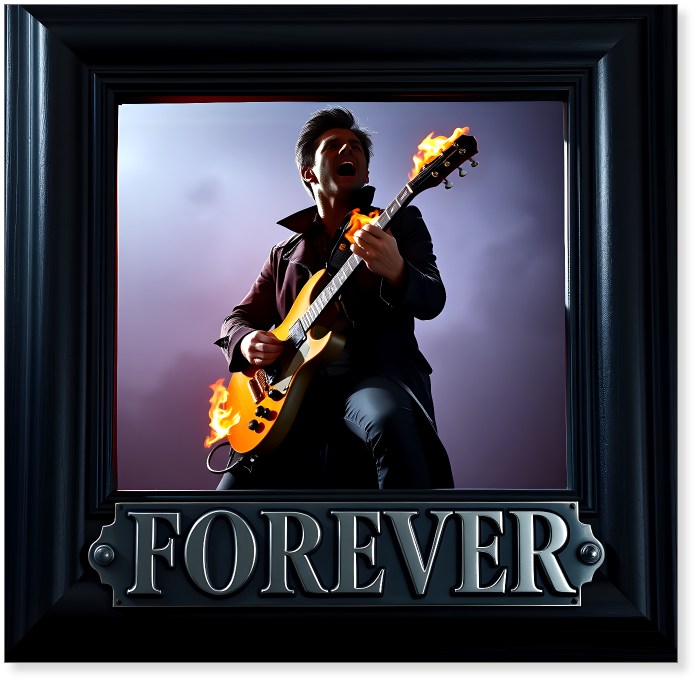
Yes. And unfortunately, Stanley passed away, and so a new writing partner got involved. And I actually went away with my wife to a retreat. And while I was there, I thought: beauty isn’t enough. There’s got to be something else motivating Dorian. And then the idea came that a rocker in those days, you know, somebody burned out, Jim Morrison, Janis Joplin, Hendrix. And so a rock star in those days was supposed to have like a five- to ten-year career at most, because once you started to look old, you wouldn’t have a career. We didn’t know about that. We didn’t know that Mick Jagger would still be rocking in his 80s. We didn’t know that McCartney would be doing it. We didn’t know.
Or Bob Dylan.
That’s right. And we didn’t know. So the idea was: make him a rock star. And then the idea was, well, when would he be a rock star? Obviously, it would be the 1960s, because that was kind of the peak of the groups like the Beatles and the Who, and Simon and Garfunkel.
Something else was intriguing about the 1960s, too.
Because there’s a part of the plot of the original “Picture of Dorian Gray” where he falls in love with this actress named Sybil Vane, and she’s not of his class. He’s upper class and she’s lower class.
Okay?
And basically, once he makes the wish, he changes. We think. We don’t know if the wish causes him to change or whether he just changes, but he changes. And he sees her perform, and he used to love her performing, but now she’s so in love with him that she can’t perform anymore. So she’s lousy. And he brings his friend to see her, and he’s embarrassed. And so he leaves her. He just kind of throws her over.
How does this work?
And she kills herself.
How does this work into where you went?
Well, when I read that, I thought, okay, we’re in the 1960s and we don’t have a class issue, but we sure as heck have a race issue. So it should be an interracial relationship, because in the 60s, an interracial relationship was not an easy thing to have. In many states, it was illegal to have an interracial marriage, and in the South, forget it. And even in his milieu, which is New York City, if he’s going to sell records to a white audience, because audiences were very segregated, even in 1965, you had the R&B charts and then you had the rock charts, and they didn’t often cross over. So the feeling is, if you’re going to have that kind of relationship, it could be career-damaging in those days. And so that all kind of played together with Sybil Vane. And then I thought, 1960s but 1965. Where would he meet this girl, this Black girl? And he’s a guy that really cares about social justice. So the decision, because he had to come from up here to down here, right? He had to make a transition. So we wanted to make him very innocent, but a guy that’s really passionate about social justice. So where would they meet? They would meet at Selma, and they would meet at the Edmund Pettus Bridge. And they do. And there’s a song at the Edmund Pettus Bridge, a gospel song called “Crossing Over.”
So, we have a lot of history in this.
There is a lot of history in it. There is a lot, because another thing that worked out very well using the original story was that the brother in the original goes into the Merchant Marine and goes away for years and years and years and comes back still looking for revenge, because his sister has killed herself over this guy who he’s never met, doesn’t know who he is.
So, I’m getting a little ahead of myself, but Merchant Marines in 1965?
Merchant Marines, where does that go? Well, it goes to Vietnam. And so James Vane, the brother, becomes a Vietnam War veteran. And he comes back with PTSD and drug addiction. And that was happening because the war was heavily borne by Black and Latino soldiers at that time. They couldn’t get the student deferments. They couldn’t find the way out. And so the war was… I mean, look at “Platoon”, for example. The officers tended to be white, but the soldiers tended to be Black and Latino, and other ethnicities. So that also seemed to play into where I wanted to go with the story. And James Vane became that figure. And there’s a scene actually later in the 2000 period, in the 1999 period, and there’s a scene at the Vietnam War Memorial when he goes with a group of friends to light a candle for the veterans who came home and don’t have their names on the wall. And that’s called “The Forgotten Men,” the ones who have been forgotten.
So all of this kind of came, and I know you’re getting the impression, probably, this is not through-sung. So there is dialogue. It’s not like a Jesus Christ Superstar where it’s all music, or Hadestown. This is a song show, not a through-sung show. So there are scenes with dialogue, and those scenes have quite a lot of humor in them, I think largely thanks to Gary and a lot of the wit that he’s brought to it. And so it’s not a heavy ride. I think it’s a fun ride overall, with some serious themes going on.
So, since we were just doing origin and we’ve gotten into it a little bit, just to sort of conclude this interview: it takes place from 1965 and it goes to the year 2000. And within that time period, we go through the 70s, the 80s, the 90s.
Yes, we do.
And very quickly, actually, we go from 1965 to 1999 pretty quickly. We do it in one song called “Down Down Down,” where we kind of see his life and the changes in his life and how they’re affecting his relationships, because remember that he’s not paying any penalty for the drugs. He’s not paying any penalty for any of that, because the picture’s paying the penalty. He isn’t. So he has a pretty rough life during that musical montage. But during that, we hit Flower Power, we hit disco, we hit heavy metal. Yeah, we hit those styles. And in the show itself, a lot of ’60s styles: Motown, we’re in the ’65 period, Motown, rock, gospel, protest song.
It sounds very fun.
I think it is. I think it’s fun. You’ll decide, because if you’re at the website now watching this, then hopefully you’ve already listened to the previews of every song. We have every song in the score with a little 30-second clip, and you can hear that and see if you like it.
Okay. This is the “sell the book” moment right now.
This is the “sell the book” moment.
Tell them if they’re not…
And if you’re not on the website, if you’re at the social media post, you’ve got to hear more about this. So come to forevermusical.com and read the story, the complete story. I’ve told a lot of it, but read the complete story.
And you want them to become a fan.
And become a fan. Be one of the Forever 1,000, which is the first thousand fans for us. And we hope you like it as much as we enjoyed making it. It’s been a long journey for me, particularly because I started it many, many years ago, but you know, shows go through changes. They go through different partners. They go through different teams, different writing teams. Not unusual.
And the website is here to help you get the right producers involved?
Exactly. We’re trying to go to the next level. We want to do a staged reading in April to attract producers and regional theater owners, and directors. So you can be a part of that, and we want you to be a part of that, and we hope you really enjoy Forever and become a fan.
Forever starts now.
It sure does. Forever begins now. Thank you for that, Gary.
Thank you, Barry.

Join the conversation
The story continues long after the curtain falls. We invite you to share your own memories and your own truth. What choice defines the legacy you leave? What wish will become your forever? Connect with our team and with each other by joining the conversation.
Hashtags
USE:
and see your story featured
Follow Us