
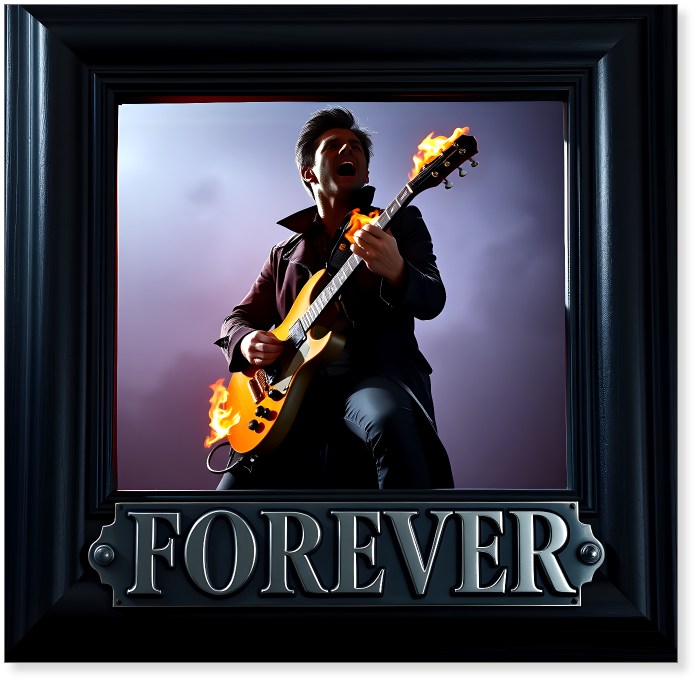
From New York to Now: The Workshop That Changed Forever
Winning awards doesn’t mean a show is finished. Sometimes it means the real work is just beginning.
Barry Gordon and Gary B. Lamb take you inside the development journey of Forever, from its first iteration at the New York Musical Theater Festival to the workshop that revealed what the show could truly become. They won the Director’s Choice Award and got rave reviews from Backstage magazine, but Barry knew something wasn’t right yet.
In this candid conversation, the creators reveal what happens when opportunities fall through, when creative teams change, and when you realize the show you thought was perfect still needs work. They talk about the moment an actress challenged their Act One ending, the songs they rewrote after the workshop, and why they decided to record a full cast album even though the show is still in development.
You’ll hear about the incredible cast that brought these characters to life, the musical director who helped shape the sound, and the team that made this unconventional approach possible. Most importantly, you’ll understand why musicals are never truly finished until opening night, and sometimes not even then.
VIDEO TRANSCRIPTION
Hi folks. So, this is kind of Genesis part two.
And this time, I figured that my buddy Gary, Gary B Lamb, and I would have a conversation. We kind of, I kind of talked a little bit about how the ideas first came, how they started.
Yeah.
And then we actually had an opportunity to go to New York, to the New York Musical Theater Festival.
Okay. So this show has been in the musical theater. Well, not this show, not the way we’ve done it, but its first iteration, its first version did go to New York. We won the Director’s Choice Award.
I’m sorry, I’m sounding like an interviewer, but I know all this.
You do know. So yeah, we won the Director’s Choice Award and got a great review from Backstage magazine, which was an industry trade, and it said that the show was magnificent.
But the truth was, it wasn’t magnificent in my opinion. I liked the music; the music was good, and most of the original music is still part of the show, but it wasn’t where I wanted it to be. The book wasn’t where I wanted it to be.
And it also didn’t get picked up by producers. It got picked up by a regional theater that then lost its funding. I mean, these are the things that happen with musicals, right? Or with any show. You know, you get opportunities, but then some of those opportunities disappear.
And in fact, the reason that Gary and I started working on the show was that someone came to me just a few years ago and said that they had an interest, remembered the show from New York, and had an interest in it. And then that person got ill and wasn’t able to continue.
They had a star name they thought would be attached to it, that they’d spoken to.
And that’s when Barry brought me on to make changes to the script.
Yeah, because the original partner didn’t want to do that. And there’s nothing unusual about any of this. It’s really the way development often goes with a show, where you have a creative team and then the creative team changes.
But Gary, I just remember we were working on the revue and I wanted you to take a look at the show, right? We put together a musical revue, “Come On Up, Compton,” about the complete history of the American musical in 90 minutes or less.
The show mascot. That’s Compton.
And we had so much fun putting that together that we ended up wanting to work more. And what should we work on? And Barry said, “How about this?”
And with all that possibility in mind, we started to go whole hog. And when Barry said that, that fell through partway through our working, nothing would deter us from finishing what we started, because it was going in such great directions.
Now, you know, you get two people together and they’re working, they’re working, and they have no idea if it will work. And that’s why we do readings and so on. So we got some friends together and we read through it when we thought it was perfect.
And it wasn’t.
And that’s when we learned to do some new stuff, and so we did some more rewrites then. And then we decided that an actual workshop, where we cast people and got great voices, which we did, which you will hear on the website, because that’s the cast that we had for the workshop. And they were so good. So, so good.
So you’ll hear Joey Rogerro as Dorian. You’ll hear Sydney Endicott as Bessie and Annie. And it’s not that we were too cheap to hire two actors. It’s that Bessie and Annie are played by the same person, because one is the mother and one is the daughter, 35 years later.
So that’s why you’re going to hear from both of those.
So we put together a fantastic cast: Sybil Bain, James Bain, Christopher Hester, Frank Lawson as the Reverend Bain, the father of Sybil and James.
Henry. We haven’t talked at all about Henry. Henry Watton is a very key figure in Wilde’s book. Henry Watton in Wilde’s book is a friend. In this, he’s Dorian’s manager and maybe record producer. You never quite know whether he’s the record producer. We never get into that. But he does have a record company, so maybe he is.
And so Henry Watton is a very, very key figure, brings a lot of the humor to the show, too. And he’s played by Thompson Sule. So you’re going to hear some just terrific voices. Go to those previews, because the previews will tell you a lot about the show. Read the liner notes so you know what the songs mean as you listen to those clips.
Well, when we put this workshop together, we had no idea we’d have these amazing voices, which prompted Barry to definitely want to get the best recording we could. So even though we worked for a week to get the show up on its feet for a very, very small audience to hear reaction from people, we decided to take them into the studio and put this really nice cast album together.
Yeah, with a nice rock band and…
Oh, we never spoke about…
Well, I always envisioned the show musically more as a rock concert, because I just saw it that way. I heard it not with a big orchestra with a lot of strings, but mostly with synth and a couple of guitars and bass, and drums, and that’s what we put together.
You’re talking about, orchestration-wise, more of a rock show. Because I wouldn’t say it’s like this rock opera or whatever.
No, it’s definitely a musical with scenes. But what that brought us to is he was talking about this band that we put together. Did we put it together, or did we have an amazing musical director?
Yes, we did, who we had also worked with on The Complete History of the American Musical.
Yes, and also orchestrator. He orchestrated it. He arranged it. He did the vocal arrangements. Lloyd. Lloyd Cooper.
And you can read his bio on the website.
Yeah, on the website. He’s definitely part of our team.
Fantastic. Very much, very much a part of the team and enabled us to put together some really good recordings. Whether we’re going to release them as a concept album or not, that’s a thought that’s maybe brewing. Be on the lookout.
Brewing.
If we raise some money, we’ll see. But we were talking a little about this workshop. Once again, we’ve worked our way into having another sit-down thing with a bunch of actors to see. Again, we thought the show was brilliant and wonderful, and it was, but in sitting there with an audience, we started to see little things that could be improved.
And one of the things that we figured was, first off, during that time, one of the actresses brought up the end of Act One.
Yeah.
And she had brought up a point that I had said way earlier, and I had made the end of Act One, and then Barry was like, “Well, maybe we should do this and save that.” And she brought it up and she was like, “No, no, it should be this.” And Barry agreed.
So we changed the end of Act One before even the audience was there. But then it started to make us realize, well, is Act One now a little bit too long, and is Act Two a little too short? And so we made some changes after this workshop, which again brings us to the point where now we think it is ready for a really, really full-on staged reading. Not something we throw together in a week with very little time.
Well, we actually wrote a new song after the workshop, and we changed another one, which was a little tricky because we’d already recorded it in a different version. So we actually changed it so that we could still use the recordings, just edit them. And we were able to do that.
But, you know, necessity becomes the mother of invention. And that was one, because in this workshop we asked some people for some feedback, and part of the feedback got us to think, okay, how do we do this better?
And so that’s the process of a musical, and we are still in that process. However, again, we think it’s ready for that next step, and that’s why we’ve created this great website.
And it will change. I mean, a director comes on board, it changes. A producer comes on board, it changes. I mean, it’s going to change, and we both know that.
But we both think it’s in the best form possible for someone to take it, a director to take it, and breathe maybe even more life into it. But it is, it’s a really good show, I think.
So that’s why we’ve taken this step and put together this website.
And Gail has been instrumental in putting together the website.
She has. She has. And 5D Spectrum, amazing. D and Katie are just sensational. Our website team, our marketing team are just really great, great people, and you can read their bios on the website as well, and should.
By now, we’re assuming you’ve gone to the website, forevermusical.com.
Yeah.
And that you’ve become a fan or that you’re going to become a fan. And yeah, probably, if you’re watching the third blog post.
Well, maybe they never saw the other two.
You might have. That’s true.
And they’re like, “What the heck? What are we talking about? Who are these two clowns?”
I know.
And just to remind you, we are talking about a musical called Forever. And the website, if you’re already here, you know what the URL is, but I’ll say it anyway: forevermusical.com.
And help us take this to the next step.
Yeah, because we really need you to do that. As we explained in our first blog post, this is kind of rare. Nobody has really done a website as a kind of a proof of concept. They’ve done concept albums. They’ve done readings. But they haven’t really done a website as that.
And so you are going to have to help us make it successful. And we appreciate you.
We sure do.
Thanks for listening and joining us.
Yes. And again, it’s Forevermusical.com.
Thank you. Forever.
I’ve got to learn that. Forevermusical.com.
You’re on it right now.
And come visit and be part of the first Forever 1000, because as we love to say, forever begins now, and with you.

Join the conversation
The story continues long after the curtain falls. We invite you to share your own memories and your own truth. What choice defines the legacy you leave? What wish will become your forever? Connect with our team and with each other by joining the conversation.
Hashtags
USE:
and see your story featured
Follow Us